

What could ₦10,000 buy in 1990? At the time, the national minimum wage was ₦125 per month, so ₦10,000 was equivalent to more than six years’ income for a minimum-wage earner. It could comfortably cover basic household necessities such as food, rent, transportation, and utilities for a substantial period of time. By the early 2000s, the minimum wage had increased to ₦5,500, and ₦10,000 could barely cover two months' pay for one individual. However, it could still purchase substantial amounts of basic food staples, such as rice, affording up to four 50 kg bags. Today, ₦10,000 is only a fraction of the national minimum wage, which is set at ₦70,000, and can barely cover basic necessities for an individual in a week. Two online inflation calculators estimate that ₦10,000 in 1990 would be worth about ₦3.5 million today, reflecting an annual inflation rate of 18.28% and a 99.72% loss in purchasing power.
Why have Nigeria’s living costs continued to rise while purchasing power has declined? Nigeria’s economic climate is characterised by significant hardship for much of the population, while prices remain at their highest level in years. Nigeria’s inflation has been due to economic shocks, policy changes, and insecurity, contributing to a persistent rise in the cost of living.
Nigeria’s Cost of Living Crisis
Obinna earns ₦200,000 monthly as a keke napep driver. His income barely covers rent, food, utilities, transportation, medication, and education for his family of five, leaving them struggling to make ends meet and taking multiple loans to cover outstanding bills.
Khadijat is in a similar situation; her ₦120,000 salary is barely enough to cover her basic expenses. She finds herself cutting back on nutritious food items like meat and fish, and purchasing eggs occasionally and semi-rotten vegetables to ensure her income stretches to the end of the month.
Bisi has been working the same job for five years, earning the same ₦350,000 monthly as a teacher in a private secondary school. Over the years, her purchasing power has shrunk. In 2025, she transferred her children from private schools to public schools because she could not afford to keep paying higher fees every term. Her family also moved to a smaller apartment in 2026, and they began reducing their meal portions and eating twice instead of three times a day.
These experiences are not isolated to Obinna, Khadijat, and Bisi; Nigerians across the country face similar challenges. Many people borrow to stay afloat, compromise on the quality of housing and food, or reduce portion sizes and the number of meals simply because they can no longer afford them. Incomes have remained relatively stagnant while prices have skyrocketed, making it increasingly difficult to afford necessities in the current economic climate. This pressure is reflected in the prices of goods and services such as food, energy, transportation, as well as rent costs.
Since the removal of the fuel subsidy in 2023, inflation has remained at high levels, recorded at 24.6% in 2023, and increasing to 33.24% in 2024, before declining by 10.23% to 23.01% in 2025. Inflation has reached high levels at various points in Nigeria’s history, peaking at 72.84% in 1995. However, policy measures such as the fuel subsidy removal and naira devaluation, alongside issues such as insecurity, poor transport networks, and the housing deficit, have exacerbated the rise in the general price level, leaving Nigerians struggling to meet their basic needs.
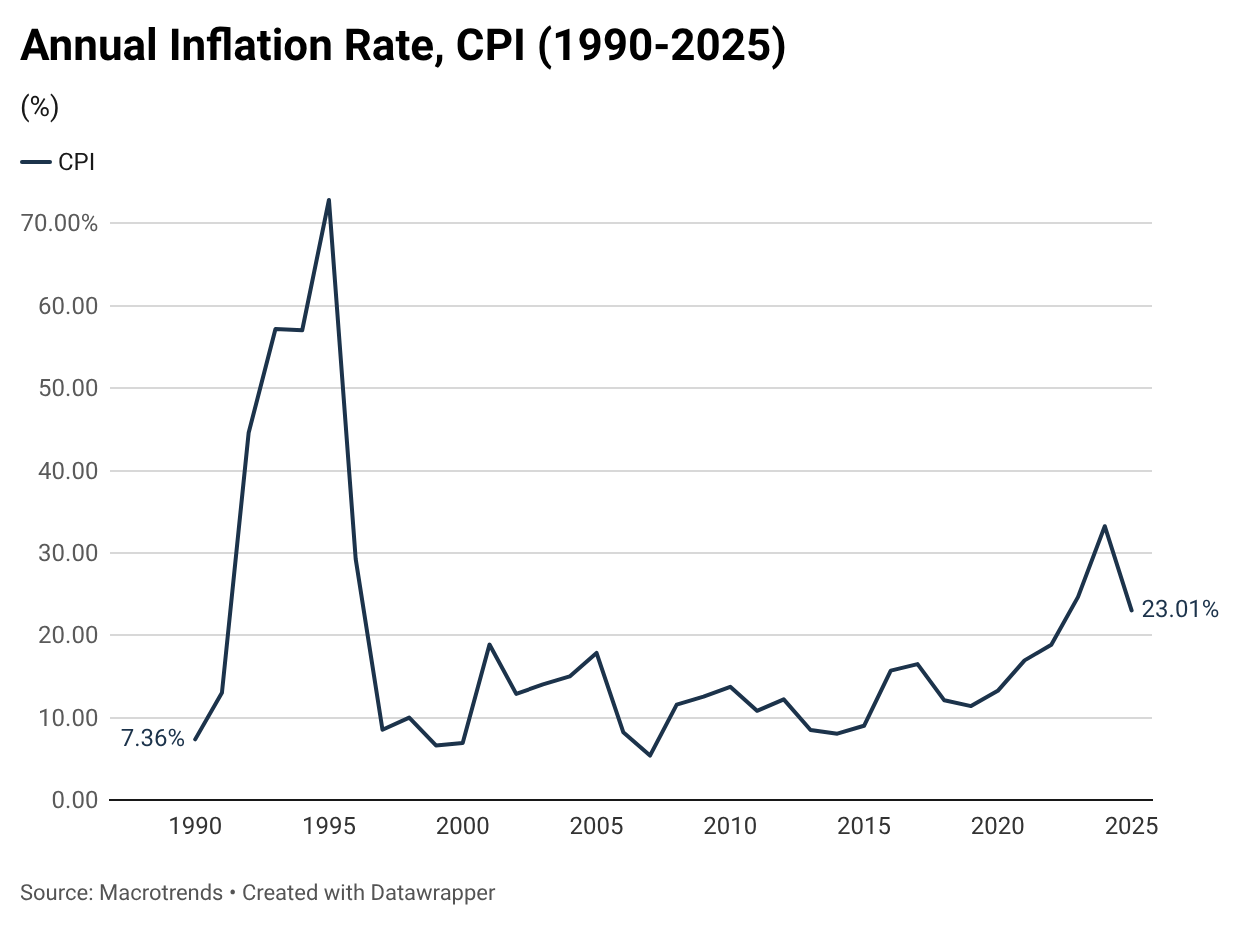
Figure 1: Annual Inflation Rate, CPI (1990-2025)
Source: Macrotrends
Headline inflation was recorded at 15.15% at the end of 2025 and eased slightly to 15.10% in January 2026. However, this easing momentum could not be sustained. Inflation rose to 15.38% in March 2026, peaked at 15.93% in May, and then gradually eased to 15.39% in August. These numbers show that Nigeria’s inflation remained high but relatively stable, meaning prices stayed elevated but rose more slowly. Food inflation tells a different story. The year began with a single-digit figure of 8.89%, the lowest in 14 years, providing cautious optimism for continued stability in food prices. Unfortunately, this decline could not be sustained. Food inflation rose steadily, surpassing headline inflation in April at 16.06%, and reaching its highest level of the year at 20.31% in July, before easing slightly to 19.57% in August. This shows that food prices were rising faster than prices for other essential goods and services. Food prices are where Nigerians feel the most pressure, causing individuals to skip meals, reduce portion sizes, or substitute nutritious ingredients for lower-quality produce. The World Food Programme (WFP) reports that 36.2 million Nigerians are experiencing acute food insecurity in 2026, with 2.1 million facing emergency levels of hunger. With food prices continuing to rise, the pressure on food-insecure households is likely to persist.
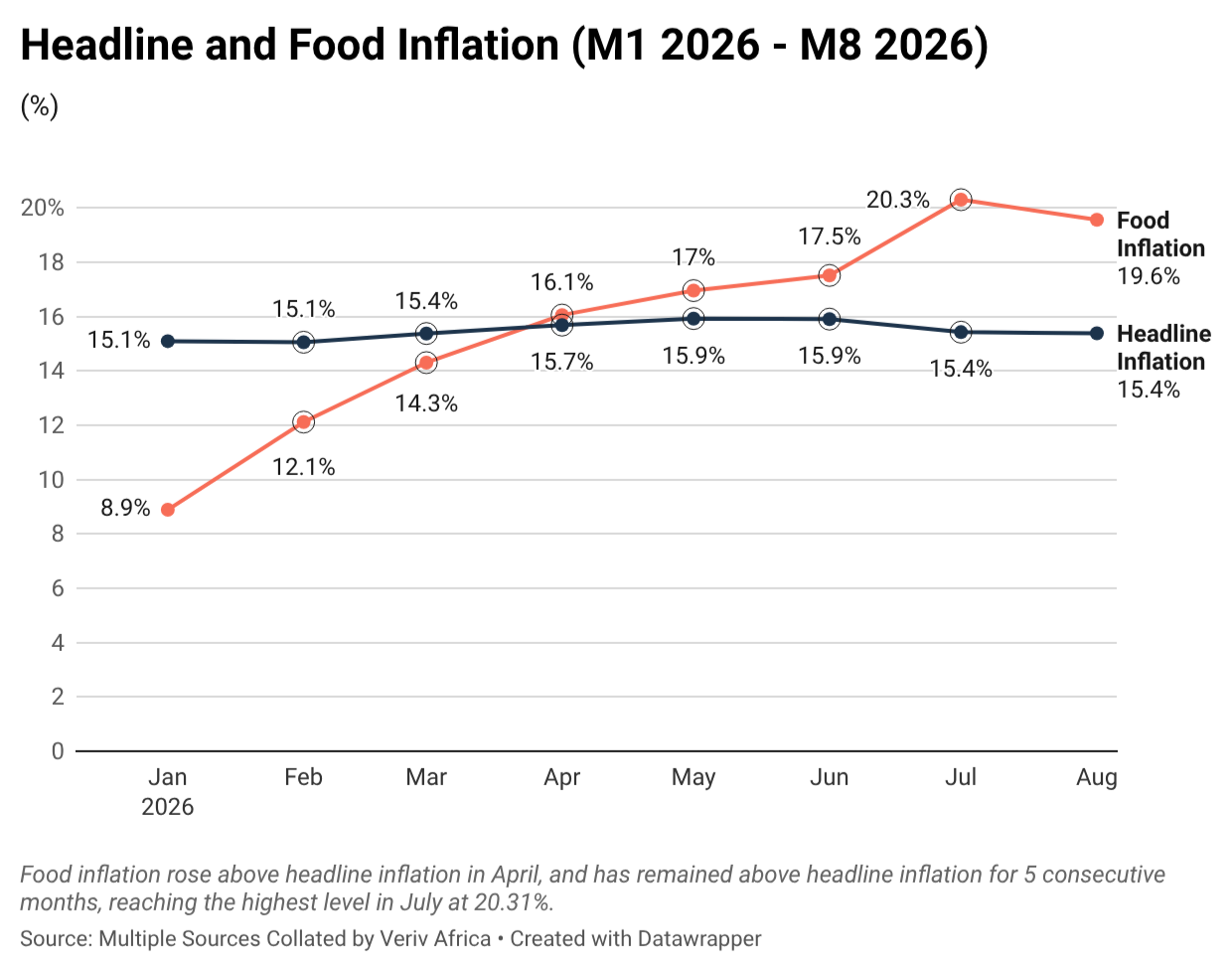
Figure 2: Headline and Food Inflation (M1 2026 - M8 2026)
Source: Multiple sources collated by Veriv Africa
Beyond acute food insecurity, Nigerians are struggling to afford basic healthcare and housing. 76% of Nigeria’s healthcare expenditure is paid out of pocket, with only 9% of the population insured. This means that the majority of Nigerians pay for medical services such as consultations, laboratory tests, medication, and hospital admission from household income or savings. Given the current high cost of healthcare, lack of health insurance, and decline in purchasing power, many Nigerians are forced to spend a significant portion of their income or savings on healthcare, while others delay treatment, seek cheaper alternatives, resort to self-medication, or forgo treatment altogether if they cannot afford it.
Housing presents similar pressures. Nigeria has a huge housing deficit of 14.92 million units, which is valued between ₦21-₦59 trillion. Of the available housing, 15.2 million are classified as structurally inadequate and substandard, while rent prices in urban areas are becoming increasingly unaffordable. In Lagos, for example, a two-bedroom apartment in neighbourhoods like Lekki or Surulere costs between ₦2.5 million and ₦6 million, with agency fees added on average, leaving low- and medium-income families priced out of adequate housing. Even constructing privately owned homes has become extremely expensive, with the cost of construction materials increasing continuously. With the national minimum wage pegged at ₦70,000, many Nigerians can neither afford adequate housing nor proper healthcare.
Nigeria went from ₦10,000 being able to cover necessities for a substantial period in 1990 to barely feeding 1 individual for a week in 2026. These sustained high prices stem from several factors, including domestic and international economic shocks, insecurity, poor transport networks, low food supply, housing deficit, and poor policy implementation and enforcement. The 2023 fuel subsidy removal is a prime example of a domestic economic shock. The subsidy removal triggered an immediate hike in fuel prices from ₦189/litre to ₦557/litre, which trickled down to transportation, food, and business operating costs. Insecurity has also increased the cost of living by disrupting agricultural activities, limiting access to farmlands, destroying produce and infrastructure, reducing food supply, and increasing food prices. International economic shocks also have significant effects on the domestic economy. The ongoing conflict in the Middle East is a prime example, causing global oil prices to rise above the $100 mark per barrel early in the year and pushing internal pump prices up, with transportation prices increasing by 50% and general price levels increasing in response.
Overall, inflationary pressures in the Nigerian economy have remained high, placing significant pressure on low- and medium-income households whose incomes are increasingly unable to keep pace with the cost of basic commodities. As seen with ObinnaTunde, Khadijat, and Bisi, Nigerians are being forced to make difficult trade-offs, including spending on healthcare, housing, and nutritious meals as prices continue to rise. If inflationary pressures remain high and purchasing power continues to decline, more Nigerians may be forced to tighten their budgets and reduce the quality of products they consume simply to survive, increasing the risk of falling into poverty and compromising their well-being. The cost-of-living crisis affects Nigerians across the country, with 63% of the Nigerian population living in multidimensional poverty, and 36.2 million people experiencing extreme hunger. As price levels remain elevated, the pressure on households could intensify further.
The Inflation and Purchasing Power Dilemma
Nigeria began the year with optimism when headline inflation eased to 15.10% in January from 15.15% in December, sustaining a ten-month decline. Despite easing inflationary pressures for most of 2025, market prices remained high. By March 2026, inflation increased moderately to 15.38% amid high food costs, exchange rate volatility, supply constraints, and government reforms. After reaching the highest level for 2026 at 15.93% in May, it eased to 15.39% in August. Nigeria’s inflation trend between 2025 and 2026 reveals an economic dilemma: inflationary pressures are stabilising, but Nigerians are still struggling. In 2025, inflation eased continuously, from 24.43% in January to 15.15% in December; however, in 2026, the inflation rate remained relatively stable, hovering between 15.06% and 15.93% from January to August. Inflation eased in 2025 and stabilised in 2026, but price levels remained high. The puzzle is this: why have easing inflationary pressures not translated to lower market prices and better lived experiences for Nigerians?
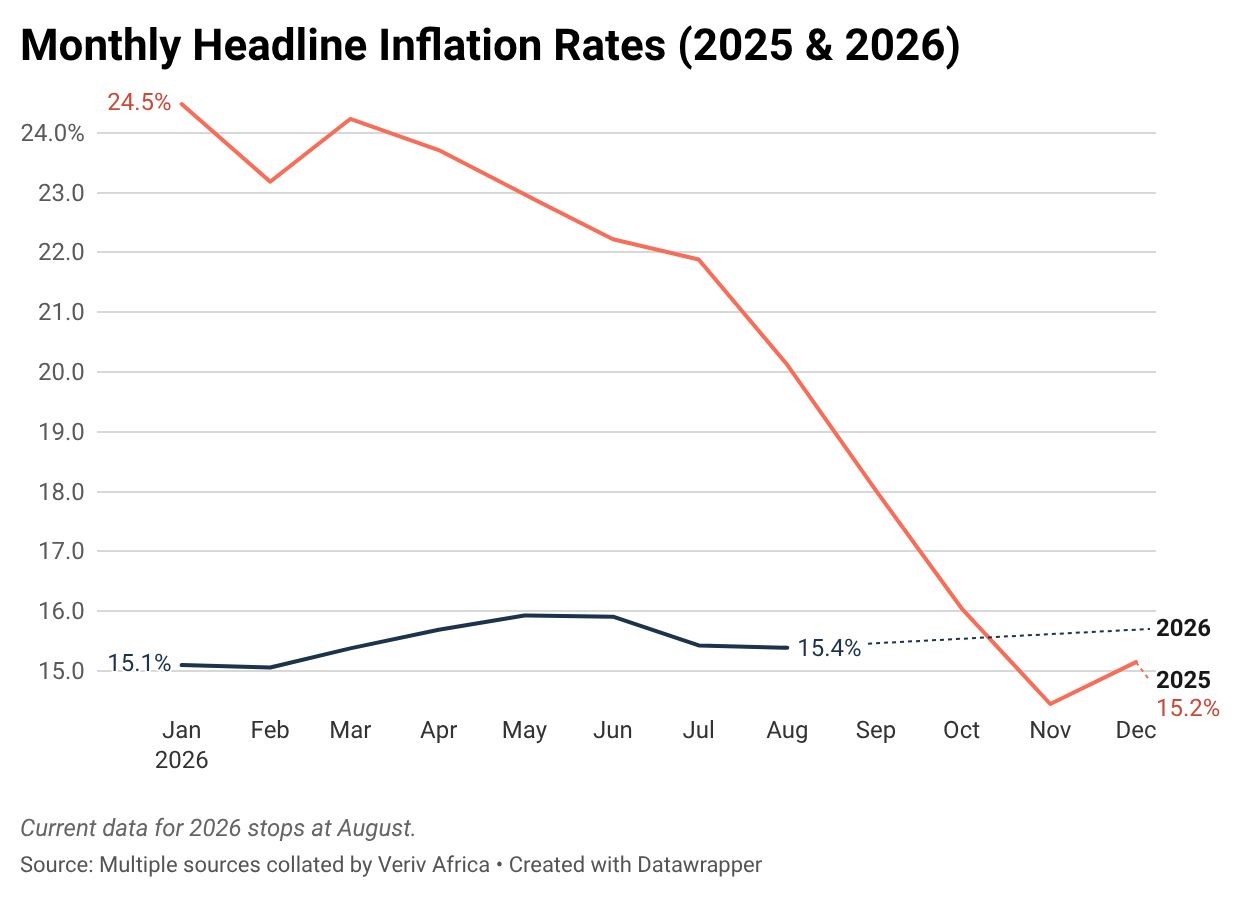
Figure 3: Monthly Headline Inflation Rates (2025 & 2026)
Source: Multiple sources collated by Veriv Africa
Nigerians still face high market costs because easing inflationary pressures does not automatically reverse past price increases or strengthen household purchasing power. Prices that have already increased do not immediately fall, and household incomes do not automatically catch up with previous price increases. However, easing inflation does mean that the rate at which market prices increase declines, potentially allowing household incomes to stretch further as prices rise more slowly. The 2026 numbers show that despite the global oil price increases, insecurity, and food supply shortages, price levels remained relatively stable throughout the year. This means that Nigerians did not experience lower market costs, but economic shocks did not drive prices up exponentially, indicating greater price stability. Nevertheless, an average inflation rate of 15% is still quite high, and many Nigerians continue to face high market costs. The focus should now be on translating this stability into better lived experiences for Nigerians by strengthening purchasing power through targeted government policies, addressing Nigeria’s insecurity challenges, and resolving transport network bottlenecks.
The CBN’s recent reset of the Monetary Policy Rate (MPR) to 23% could potentially strengthen Nigerians' purchasing power. MPR was reduced from 26.5% to 23%, which could lead to lower interest rates for commercial banks. Lower interest rates can stimulate the economy by encouraging more Nigerians to access credit to expand their businesses, potentially supporting income growth and job creation. As incomes increase, purchasing power will improve, reducing pressure on household budgets. However, this alone cannot avert the crisis; the government must address issues that constrain supply to ensure that prices stabilise and that macroeconomic improvements translate into better living standards for Nigerians.
Policy Options for Stability
Issues such as insecurity, food supply shortages, poor policy implementation and enforcement, and weak transport networks put upward pressure on prices and erode consumer purchasing power. The government must take decisive measures to address the factors driving price increases, strengthen purchasing power, and ensure adequate supply of essential goods to address Nigeria’s cost of living crisis. These policy options include:
- Address Nigeria’s Security Crisis: Nigeria is currently battling a severe insecurity crisis, claiming over 91,000 lives since 2011. Banditry, kidnapping, school abductions, communal violence, and organised crime have disrupted economic and agricultural activities in affected areas, destroyed farmlands and produce, displaced many Nigerians, and disrupted livelihoods, further exacerbating the cost of living crisis and increasing poverty levels across the country. Many of these attacks are concentrated in Northern Nigeria, affecting food-producing states like Niger, Plateau, Borno, Adamawa, Yobe, and Sokoto, negatively impacting agricultural activities and causing food shortages. The federal government must urgently address the persistent crisis to manage increasing food prices and the cost of living crisis.
- Targeted Government Expenditure: The federal government and state governments can introduce policies and interventions that cushion Nigerians in the current harsh economic climate and strengthen household incomes, such as targeted subsidy programmes to support the most vulnerable individuals and investment in infrastructure to increase productivity in sectors such as agriculture and manufacturing. These measures can reduce pressure on vulnerable households while strengthening domestic production and supporting price stability.
- Fix Nigeria’s Housing Deficit: The country currently has a housing deficit of 14.92 million units, worth ₦21-₦59 trillion, making adequate housing difficult for many Nigerians to afford. Additionally, the cost of housing in Nigeria is extremely high, with excessive agency and service fees becoming increasingly common, especially in urban areas. The Nigerian government can address the housing shortage by increasing investment in housing development and infrastructure, as well as ensuring proper implementation of the National Housing Fund (NHF). The government can also collaborate with and incentivise developers to provide housing options for low-income earners, while regulating excessive rent, agency, and service charges to manage the cost of housing and address the housing deficit.
- Increase Investment in Infrastructure Development: The federal government can reduce living costs by addressing Nigeria’s infrastructure deficit, particularly its transportation networks for food and other essential commodities, which drive up transportation and business operation costs. Fixing critical road infrastructure, increasing electricity supply, and enforcing the adoption of compressed natural gas (CNG) and electric vehicles (EVs) can improve efficiency along the agricultural value chain, reduce operating costs for businesses, and lower transportation costs nationwide.
Conclusion
Nigeria’s cost of living crisis is characterised by rising price levels that constantly outpace household incomes, forcing Nigerians to shrink their budgets, skip meals, downsize their housing, and forgo essential healthcare services to make their incomes stretch further. Despite the relative stability in inflation throughout 2026, price levels have remained high, with consumers’ purchasing power shrinking due to structural bottlenecks such as persistent insecurity, supply constraints, weak policy implementation, and poor infrastructure. However, with the MPR reset at 23%, purchasing power could be strengthened if lower borrowing costs enable business owners to access credit, expand their businesses, boost productivity, and create jobs and income. Nevertheless, the federal and state governments must align fiscal policy with CBN’s monetary policy to ensure that this stability translates to better lived experiences for Nigerians. Policy measures must address insecurity and supply constraints, Nigeria’s housing deficit, and the needs of vulnerable households, helping Nigerians like Tunde, Kadijat, and Bisi to finally experience relief.
References
Abayomi, R. (2023, November 9). Impact of fuel subsidy removal on Nigeria’s economy.
The Guardian Nigeria. https://guardian.ng/opinion/impact-of-fuel-subsidy-removal-on-nigerias-economy/
Adigun, O. (2025, February 18). Nigeria’s inflation rate drops to 24.48% in January 2025
amid CPI rebasing. Nairametrics. https://nairametrics.com/2025/02/18/nigerias-inflation-rate-drops-to-24-48-in-january-2025-amid-cpi-rebasing/
Adigun, O. (2026, April 15). Nigeria’s inflation climbs to 15.38% in March 2026. Nairametrics.
https://nairametrics.com/2026/04/15/nigerias-inflation-climbs-to-15-38-in-march-2026/
Adigun, O. (2026, June 15). Nigeria’s Inflation rises to 15.93% in May 2026. Nairametrics.
https://nairametrics.com/2026/06/15/nigerias-inflation-rises-to-15-93-in-may-2026/
Adigun, O. (2026, September 15). Nigeria’s headline inflation eases to 15.39% in August.
Nairametrics. https://nairametrics.com/2026/09/15/nigerias-headline-inflation-eases-to-15-39-in-august/
Adigun, O. (2026, August 18). Food inflation hits 20.31% in July, highest in 10 months.
Nairametrics. https://nairametrics.com/2026/08/18/food-inflation-hits-20-31-in-july-highest-in-10-months/
Akintaro, S. (2026, February 16). Nigeria’s inflation eases to 15.10% in January 2026.
Nairametrics. https://nairametrics.com/2026/02/16/nigerias-inflation-eases-to-15-10-in-january-2026/
Akpan, U., Esiedesa, O., Ejoh, E., Eko, M., & Badru, A. (2026, March 10). M-East war:
Hardship deepens with petrol selling at N1,300 per litre. Vanguard News. https://www.vanguardngr.com/2026/03/m-east-war-hardship-deepens-with-petrol-selling-at-n1300-per-litre/
Anagah, F. I. (2024). Trend Analysis Of Consumer Price Of Rice In Nigeria: 2000 -2020.
IOSR Journal of Agriculture and Veterinary Science. https://www.academia.edu/123198461/Trend_Analysis_Of_Consumer_Price_Of_Rice_In_Nigeria_2000_2020
CBN. (2026). Monetary Policy Decisions.
https://www.cbn.gov.ng/MonetaryPolicy/decisions.html
NBS. (2022, November 17). Nigeria Launches its Most Extensive National Measure of
Multidimensional Poverty. https://nigerianstat.gov.ng/news/78/
Nigeria Inflation Rate (1960-2025). (2026). Macrotrends.
https://www.macrotrends.net/global-metrics/countries/nga/nigeria/inflation-rate-cpi
Ogunremi, A. (2026, March 27). History of Minimum Wage in Nigeria: 1990–2026. Haba
Naija. https://www.habanaija.com/history-minimum-wage-nigeria-1990-2026/
Omolaoye, S. (2025, February 28). 91,740 Nigerians lost to insecurity in 13 years - Report.
The Guardian. https://guardian.ng/news/91740-nigerians-lost-to-insecurity-in-13-years-report/
The Commonwealth Fund. (2026). Nigeria International Health Care System Profiles.
https://www.commonwealthfund.org/international-health-policy-center/countries/nigeria
Tunji, S., & Nwafor, A. (2026, February 17). Food inflation in Nigeria hits 14-year low at
8.89%. Punch NG. https://punchng.com/food-inflation-falls-to-14-year-low/
Tunji, T. (2026, May 18). Nigeria’s food inflation surpasses headline rate for first time in
eight months. Nairametrics. https://nairametrics.com/2026/05/18/nigerias-food-inflation-surpasses-headline-rate-for-first-time-in-eight-months/
Tunji, T. (2026, September 15). Nigeria’s food inflation drops for the first time in six months
to 19.57%. Nairametrics. https://nairametrics.com/2026/09/15/nigerias-food-inflation-drops-for-first-time-in-six-months-to-19-57/
Revisiting Nigeria’s housing deficit. (2026, April 2). Punch NG.
https://punchng.com/revisiting-nigerias-housing-deficit/
WFP Nigeria. (2026, August). Country Brief.
https://docs.wfp.org/api/documents/WFP-0000175902/download/


