When you think of Christmas, you picture gifts, sparkling decorations, family, joy, food, and celebrations. The Nigerian Christmas is all of that, but with a twist. Christmas in Nigeria is best described as beautiful chaos. It's everything you expect, plus smoky jollof rice, Nigerian fried rice, peppered chicken, the dry, rugged harmattan breeze, long road trips to the village, endless cooking on D-day, new clothes and shoes, detty December escapades, and the numbness of nostalgia after the celebrations end.
For many Nigerians, Christmas is arguably the best time of the year. But let’s be real, it’s also the most expensive. With overflowing lists and tight budgets, prices seem to triple overnight. Still, the show must go on. We’ve done the math for you. This year, the team at Veriv Africa calculated the actual cost of Christmas in Nigeria to help with budgeting and prepare us for the rocky road that is January.
Travel Costs this Christmas
Every year, many Nigerians travel to their hometowns to celebrate, and this year will be no different. With growing security concerns across the country, air travel is the safest option. Domestic flight prices double during the holidays. Ticket prices also vary depending on when they are booked, the flight date, and the ticket class.
Here’s a breakdown of one-way ticket prices from the official Air Peace and Arik Air websites starting December 20, 2025:
For many travellers, despite safety concerns, road transport has remained the more practical option because it costs less than flying. Flying may be faster, but road travel is more affordable. People may prefer to travel by road if the distance is short to medium length, and if they need to transport a lot of luggage. Here is the breakdown of the current road transport fares from God is Good Motors (GIGM)’s official website:
Travellers should also budget for snacks and refreshments for the long road trip, which can cost between ₦2000 to ₦5000 per person. Even with these extra expenses, the total cost of road travel remains only a fraction of the cost of flying.
Many Nigerians are opting out of commercial road transport companies and choosing to travel in their private cars. This significantly reduces travel costs, especially when travelling in groups. However, expenses like fuel, vehicle servicing, and snacks still need to be factored in. Currently, petrol sells for ₦900 to ₦1000 per litre, depending on your location, and you may need to refill your tank two to three times, depending on your destination. Premium Motor Spirit (PMS) costs between ₦920 to ₦930 per litre in the South East, ₦900 per litre in the South West, and ₦920 per litre in North Central. No matter how you choose to travel, there’s no escaping the high cost of travelling this season. Whatever option you choose, make sure to budget adequately and travel with caution.
What Is a Nigerian Christmas Without Food?
Remember Christmas mornings? The prep begins the night before, with marinating meats for D-day and slicing vegetables for the main dishes. On Christmas morning, the real kitchen chaos storms, and the cooking never ends until late into the night. The menu? Authentic smoky Nigerian jollof rice. Heavily garnished fried rice. Rich pots of stews, soups and sauces. Each plate comes with a generous portion of fried chicken, turkey, beef, goat meat or fish, topped off with a cold bottle of soda, beer or juice. This is the ultimate Nigerian Christmas experience.
Food prices vary by brand, market location, quantity purchased, and purchase time. Prices of foodstuffs also go up around Christmas time, so most Nigerians prefer to do their Christmas shopping as early as they can to avoid the price hikes. Here’s a breakdown of everything you will need to recreate those nostalgic moments this festive season from The Market Food Shop, My Food Shop and Supermart websites:
Smoky Nigerian Jollof Rice
Garnished Nigerian Fried Rice
Native Soup: Egusi Soup
Swallow Options
Coleslaw
Christmas Outfits and Gifts
Gift-giving and new outfits are also part of the whole celebration experience. And the gift options are endless! It could be a simple Christmas card, a holiday hamper, food condiments, ready-made meals, new gadgets, perfumes, jewellery, or even just something sentimental. Whatever the gift, it is properly thought out and might cost an arm, a leg, or both to share love this season. It is almost impossible to determine the average cost of gifts this December because prices can range from nothing to thousands of naira. In this light, we advise that you budget adequately for your gifts and be intentional when choosing them
Let’s get into Christmas outfits. Although Christmas clothes are more common among young people, adults still spend a little extra on new outfits for themselves in December. You could go to thrift shops in your local markets or shop thrifts online. You could purchase outfits from boutiques or get them tailored specifically for you. You could also go all out and buy a few items from your favourite designer. The cost of new clothes depends largely on the type and quality of clothing, the place of purchase and the quantity bought. Even thrift-store wear has ‘grades’, and the grade type determines the clothing's cost.
Here’s a breakdown of the prices of outfits this December, based on our desk research:
Detty December Festivities: Painting Naija Red
Oblee season is upon us, and Nigerians are planning accordingly. While many Nigerians travel to their hometowns for the holidays, others plan their holiday activities in bustling cities like Lagos and Abuja. The detty-ing is not just for the locals; the I-Just-Got-Backs (IJGBs) and tourists join in the partying. Last December, the Lagos State government recorded revenue of $71.5 million, with $44 million coming from the hotel sector.
The big question is: how much should a Nigerian budget for Detty December? Well, that’s a tricky question to answer. The easy answer is: a lot, you would have to hold nothing less than ₦25,000 if you want to have a great time. According to our survey report, the minimum budget for the 2025 Christmas is ₦25,000. This covers only food, without clothing, gifts, or other forms of entertainment. The more candid answer is not as straightforward.
To budget adequately, you need to consider a lot of factors. First of all, what part of Nigeria are you detty-ing? Next, how long do you plan on detty-ing December? 3 days, a week or 2 weeks? Now you need to factor in accommodation and transportation. What type of accommodation are you going for? Hotel or a short-let apartment? What activities are you doing this December? Are you attending raves, concerts, house parties or shows? Don’t forget to include the cost of eating out and getting ready, such as outfits, salon trips, manicures, and the like. The key to enjoying Detty December without breaking the bank is to plan, prioritise and be realistic about your spending.
What Nigerians Really Spend During The Holidays
Our findings show that Christmas spending doubles each year. In 2023, the average Nigerian spent ₦100,000 during the festive season. That figure jumped to ₦200,000 in 2024. This year, we’re projecting that the average spend will hit ₦435,000. That’s double last year’s figure, plus jara. Festive spending has increased by 77% year to year between 2023 and 2025.
Since 2023, Nigerians have consistently spent more every Christmas. Not because their pockets suddenly got fatter, but because the prices keep going up every year. Interestingly, the increase in spending has not been the same each year, likely due to inflation.
Nigerians across the country don’t spend equally during Christmas. Those in the North West spend the most locally, with a median cost of ₦820,000. In comparison, people in the South East and South West spend slightly less on Christmas expenses. Nigerians in the diaspora spend a lot more than those at home, due to gift and travel expenses.
Christmas spending also depends on age and gender. 77% of our respondents were women, while only 23% were men. Nigerians between the ages of 35-44 spend the least, but those between the ages of 55-64 carry the bulk of the spending. Older Nigerian women specifically spend the most during the holiday season.
Older Nigerians, aged 35 and above, consider Christmas spending as very important. However, people aged 25 to 34 rate it lower. Some do not regard it as important, while others are indifferent.
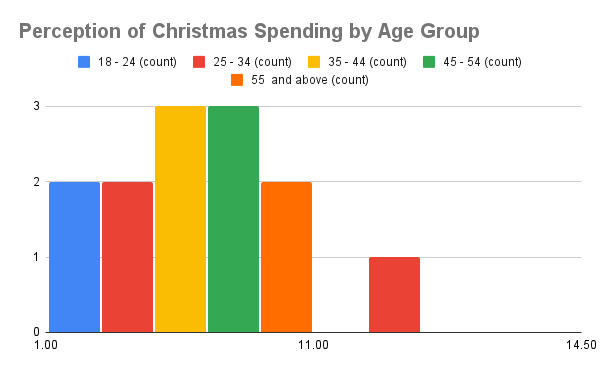
Across all age groups, 41.67% considered Christmas spending not important. 38.33% rated it semi-important. Only 20% place a high value on Christmas spending.
Household size also matters. Households with 5-6 people spend more during the holidays. However, smaller households with 1-4 people still spend a lot, even with fewer individuals. This indicates that Christmas spending is large across all household sizes.
What exactly do Nigerians spend on during the holidays? From our findings, Nigerians spend on food, clothing, travel expenses, gifts and entertainment. Food accounts for the bulk of spending, ranging from ₦0 to ₦800,000, with a median of ₦150,000.
Travelling and food have the highest price tags during the holiday season.
Nigerians can choose to celebrate Christmas alone or with family and friends. People who celebrate alone spend between ₦350,000 and ₦900,000 on Christmas expenses. Those who celebrate with friends spend more, they spend between ₦950,000 and ₦1,060,000. Nigerians who celebrate with family spend the most during the holidays. They spend between ₦25,000 and ₦3,450,000.
As the suitcases pile up, shopping lists get ticked off, and preparations kick into full gear, one thing is clear: the Nigerian Christmas experience is more than just a fun and memorable holiday; it is a full-blown economic event. Whether you’re spending Christmas alone or with family and friends, in bustling cities or in a serene village, the high price tags require careful budgeting. This year’s seasonal celebration comes with a bigger financial sting. While budgeting and spending, do not forget to enjoy the moments that truly matter: connecting with loved ones and relaxing after a long year of hard work
References
Gomos, J. (2025, February 25). Price Guide To Nigerian Fashion: Outfit For Every Occasion.
The Price. https://theprice.com.ng/price-guide-to-nigerian-fashion-outfit-for-every-occasion/
Nigeria’s cash-splashing “Detty December” festivities kick off in Lagos. (2025, December
8). The Guardian. https://guardian.ng/featured/nigerias-cash-splashing-detty-december-festivities-kick-off-in-lagos/
NNPC petrol price drops to N900/litre in Lagos, N940/litre in Abuja. (2025, November 28).
Ogbolu, G. (2025, December 4). Again, NNPCL Reduces Fuel Price. Naija News.
https://www.naijanews.com/2025/12/04/just-in-again-nnpcl-reduces-fuel-price/